Clinicians to Share Practical Strategies for Point-of-Care Ultrasound Probe Disinfection at APIC26
PR Newswire
FAIRFIELD, N.J., June 4, 2026
APIC Theater presentations follow SHEA and AIUM posters examining chlorine dioxide foam
for high-level disinfection of ultrasound probes
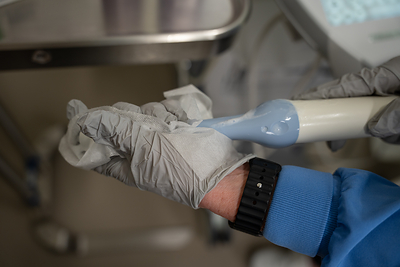
FAIRFIELD, N.J., June 4, 2026 /PRNewswire/ — Parker Laboratories and Tristel plc will co-sponsor an APIC Theater presentation at APIC26 featuring three clinicians who will share real-world experience implementing Tristel ULT™, a chlorine dioxide (ClO₂) foam for high-level disinfection (HLD) of ultrasound probes.
The APIC Theater presentations follow the lead of two scientific posters on Tristel ULT that were presented this spring at the annual meetings of the Society for Healthcare Epidemiology of America (SHEA) and the American Institute of Ultrasound in Medicine (AIUM). Together, the posters and APIC Theater presentations offer infection preventionists a timely look at the clinical, operational, and compliance considerations involved in bringing HLD to ultrasound probes at the point-of-care
The non-CME APIC Theater session, “Practical Strategies for Point-of-Care Ultrasound Probe Disinfection: From Implementation to Survey Readiness,” will take place Tuesday, June 16, from 1:30 to 2:00 p.m. in the Exhibit Hall during APIC26, the annual conference of the Association for Professionals in Infection Control and Epidemiology, June 15–17 in Nashville.
The session will bring together three infection prevention and clinical leaders to discuss practical strategies for introducing a novel chlorine dioxide foam HLD method across multiple sites, including how to gain clinical buy-in, support compliant implementation, strengthen documentation, and prepare for accreditation reviews.
Ultrasound probes used in semi-critical procedures require high-level disinfection between patients. For many healthcare facilities, automated approaches to HLD can create challenges with workflow, space, turnaround time, cost, maintenance, and documentation. Point-of-care HLD with chlorine dioxide foam is designed to help reduce those barriers while supporting consistent compliance in busy clinical environments.
Jennifer Griest, BSN, RN, infection prevention specialist at Mercy Health, will discuss how she helped lead the rollout of ClO₂ across 10 Mercy locations in southwest Missouri, navigating initial stakeholder concerns, validating the method through real-world data, and demonstrating measurable operational improvements, including faster room turnover and streamlined documentation.
Nikki Robertson, MHA, RDMS, RVT, ultrasound services manager, OB/GYN, University of Iowa Health Care, will describe how her department transitioned from vaporized hydrogen peroxide to ClO₂ immediately before a Joint Commission survey, achieving a “gold stars all around” result and eliminating approximately $60,000 per year in maintenance costs, with digital traceability central to the success.
Traci Major, MHA, director, perioperative services and sterile processing, HLD and sterilization, Children’s Health, Dallas, Texas, will walk through how she built the case for change against approximately 20 existing vaporized hydrogen peroxide units, ran pilot trials in interventional radiology and echocardiology, secured leadership buy-in, and executed a systemwide implementation delivering a two-minute bedside turnaround with no paper logs.
“The APIC Theater presentation is designed to give infection preventionists a practical look at how healthcare teams are evaluating, implementing, and documenting point-of-care HLD with chlorine dioxide foam,” says Neal Buchalter, CEO of Parker Laboratories. “We are proud to provide a platform for infection prevention and clinical specialists to share their experiences and discuss innovative solutions to the daily challenges of fast-paced and demanding healthcare practices.”
Recent scientific posters presented at the annual meetings of the Society for Healthcare Epidemiology of America (SHEA) and the American Institute of Ultrasound in Medicine (AIUM) provide additional context for the APIC discussion, including implementation feasibility, staff experience, workflow impact, and operational considerations related to chlorine dioxide foam.
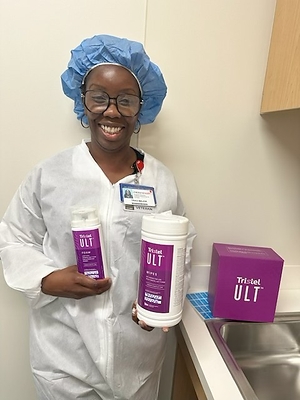
“The biggest impact is in the high-volume procedural areas and the improved turnaround time,” says Major. “Being able to perform the process at point-of-care with essentially a two-minute wait time allows the probe to go right back on the machine so staff can move directly to the next patient. Improving efficiency while still supporting safe patient care is critical, and I think Tristel ULT really hits the mark.”
The APIC26 program also includes an educational session by Nancy Moureau, PhD, RN, CRNI, CPUI, VA-BC, CEO of PICC Excellence, on infection-prevention considerations for ultrasound-guided peripheral intravenous catheter insertion. Her session, “Clean Practices, Safe Patients: Ultrasound-Guided PIVC Education Meets Infection Prevention,” will address evidence-based practices for probe protection, including transducer disinfection, and will be held on Tuesday, June 16, from 8:00 to 8:30 am.
Tristel ULT is an FDA-cleared high-level disinfectant for ultrasound probes. The product uses chlorine dioxide foam, a fast-acting chemistry, and is designed for point-of-care use without an automated reprocessor. Tristel ULT is manufactured and distributed by Parker Laboratories under an exclusive partnership with UK-based Tristel plc.
For more information, visit Tristel ULT at Parker Labs.
About Parker Laboratories
Parker Laboratories Inc. is a leading manufacturer of medical ultrasound and electromedical contact media and infection prevention products. The company’s portfolio includes ultrasound gels, probe covers, sterile barriers, and high-level disinfection solutions used by healthcare professionals in a wide range of clinical settings.
About Tristel plc
Tristel plc is a global infection prevention company focused on the manufacture and supply of products using its unique proprietary chlorine dioxide (ClO₂) chemistry. The company is a market leader in manual decontamination of medical devices, supplying hospitals under the Tristel brand, and also provides products for sporicidal surface disinfection under the Cache brand. Tristel is headquartered near Cambridge, United Kingdom, operates globally, and is listed on the London Stock Exchange’s AIM market (AIM: TSTL).
MKT-45-0073 Rev O
Liz Dowling | 760-822-3412 | Liz@dowlingdennis.net
Steve Halasey | 626-355-2500 | steve@dowlingdennis.net
 View original content to download multimedia:https://www.prnewswire.com/news-releases/clinicians-to-share-practical-strategies-for-point-of-care-ultrasound-probe-disinfection-at-apic26-302790872.html
SOURCE Parker Laboratories