
Spokane Valley, WA – November 04, 2026 – PRESSADVANTAGE –
Washington Auto Collision is publishing consumer guidance explaining why pre-repair and post-repair diagnostic scans can be important after a vehicle accident. The November publication focuses on how electronic system information supports collision damage assessment, repair planning, and verification of completed repairs on modern vehicles.
Modern vehicles contain electronic control modules that monitor and communicate with systems responsible for functions such as airbags, braking, steering assistance, lighting, and Advanced Driver Assistance Systems (ADAS). A collision can affect electronic components, sensors, wiring, or communication networks even when the resulting damage is not immediately visible.
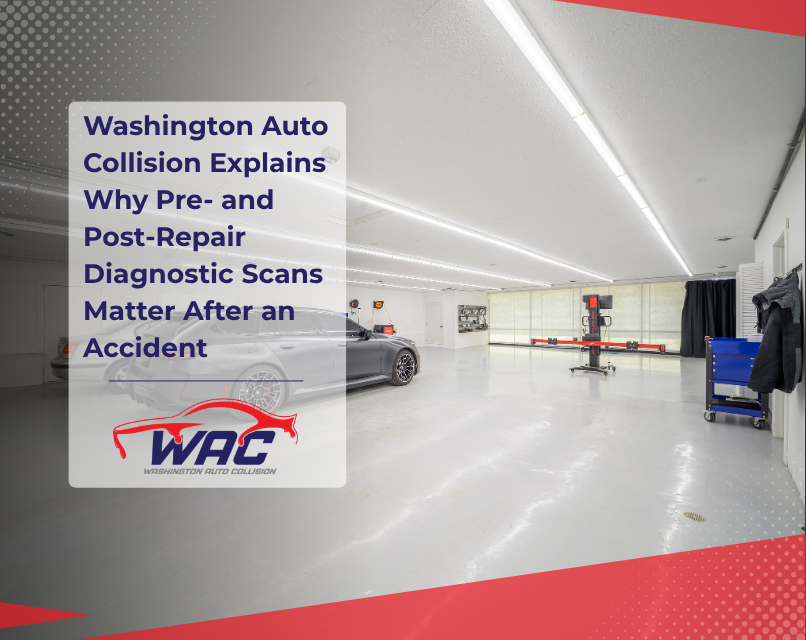
Washington Auto Collision provides collision repair services for drivers in Spokane Valley and surrounding communities. The new guidance explains how diagnostic scanning can provide information that complements physical inspections throughout the repair process.
A pre-repair diagnostic scan is generally performed during the initial evaluation or repair-planning stage. Using compatible diagnostic equipment, technicians can communicate with applicable vehicle control modules and retrieve information such as diagnostic trouble codes and system status data.
This information can help identify electronic concerns that may require further investigation. For example, a collision involving the front of a vehicle may affect components associated with driver assistance features, while damage near a wheel or body opening may involve sensors, wiring, or related electronic equipment.
The November guidance emphasizes that a diagnostic trouble code does not automatically confirm that a particular component is damaged. Codes can indicate system conditions requiring additional testing, inspection, or evaluation according to manufacturer procedures.
Similarly, the absence of a warning light does not establish that every electronic system is operating correctly. Some concerns may be stored in vehicle control modules without producing an immediately noticeable dashboard warning.
Pre-repair scanning can also help document the vehicle’s electronic condition before repair operations begin. This information may be useful when determining which concerns are associated with the accident and which require further evaluation.
Through its auto body repair services, Washington Auto Collision addresses collision damage involving exterior panels and related vehicle components. Diagnostic information can support the broader repair plan when electronic systems or their associated components may have been affected.
A post-repair diagnostic scan serves a different purpose. After applicable repairs have been completed, technicians can use diagnostic equipment to review electronic system information and identify trouble codes or conditions that may remain or have appeared during the repair process.
Comparing relevant pre-repair and post-repair findings can help technicians determine whether additional diagnostic work is necessary before the vehicle is returned to its owner.
However, the guidance distinguishes diagnostic scanning from complete repair verification. A scan alone cannot confirm that every mechanical, structural, or electronic repair has been performed correctly. Physical inspections, functional checks, and other manufacturer-specified procedures may also be necessary.
Advanced Driver Assistance Systems introduce another important consideration. Cameras, radar sensors, and related equipment may support features such as automatic emergency braking, adaptive cruise control, and lane-keeping assistance.
When a collision or repair operation affects these components, the manufacturer may specify additional procedures, including calibration. Washington Auto Collision provides information about these requirements through its ADAS calibration services.
The November publication explains that diagnostic scanning and ADAS calibration are separate operations. Scanning retrieves electronic system information, while calibration follows specific procedures to establish or verify the operating parameters of applicable sensors and cameras.
A successful diagnostic scan does not automatically replace a required calibration, and clearing diagnostic trouble codes does not establish that an underlying problem has been corrected.
The guidance also addresses documentation. Recording relevant diagnostic findings, completed repairs, and required follow-up procedures can help provide a clearer account of the electronic work performed during collision repair.
For Spokane Valley drivers, the publication recommends asking whether their vehicle’s manufacturer specifies pre-repair or post-repair scanning, whether electronic concerns were identified, and whether any additional testing or calibration was required.
The need for particular diagnostic procedures depends on the vehicle, its equipment, the nature of the damage, and applicable manufacturer instructions. Not every accident affects the same electronic systems, and the appropriate evaluation should reflect the individual vehicle.
The November guidance emphasizes that modern collision repair involves more than restoring visible body damage. Pre-repair scanning can help identify electronic conditions that require attention, while post-repair scanning can contribute to evaluating the vehicle after repairs have been completed.
Washington Auto Collision provides collision repair, auto body repair, and ADAS-related services at 16811 E Sprague Ave, Spokane Valley, WA 99037, serving drivers throughout Spokane Valley, Liberty Lake, Post Falls, and surrounding communities.
###
For more information about Washington Auto Collision, contact the company here:
Washington Auto Collision
Gary Tolerico
(509) 927-0048
info@waciwa.com
16811 E Sprague Ave, Spokane Valley, WA 99037


