
Shenzhen ,Guangdong ,China – October 28, 2026
You’d think picking out a Modern Large White Vase would be a no-brainer—until you realize how much size, texture, and where you put it can totally change a room. I found that out the hard way when I grabbed a tall ceramic one for a narrow console table. It looked gorgeous in the product photos, but the base was so wide it actually kept the drawer from opening. Yeah, that lesson stuck with me. The thing is, even a stunning vase has to work with how you move around your space, how often you dust, and it can’t just overpower the furniture sitting next to it.You know, William Morris—the famous British designer behind Morris & Co.—once said something that still hits home: “Have nothing in your houses that you do not know to be useful, or believe to be beautiful.” Honestly, that’s a pretty solid rule, especially when you’re trying to pick out, say, a Modern Large White Vase. But here’s the thing: beauty alone won’t cut it. Before you get too attached, measure your space first. Check how the vase’s height plays against your artwork, shelves, or even the window frame. A good rule of thumb is to aim for about two-thirds of the furniture’s height—that often looks balanced, but honestly, your room might have other ideas. So, trust your eyes more than any formula.When you’re checking out a vase, really look at the finish, you know? Glossy porcelain can be super reflective and feels kind of formal—like it’s dressed up for a fancy dinner. But matte stoneware? That’s way softer to the eye, especially if you pair it with oak, linen, or brushed metal. And don’t forget to peek at the opening—that matters too. A narrow neck is great for a few sprigs, while a wide mouth suits a big, lush bouquet. Now, if you’re going big, stability’s a thing. A heavy bottom keeps it from toppling over, but trust me, you’ll curse it when you have to lug it across the room to change the water.Here’s the thing though—pure white isn’t always the safest bet. Warm ivory can work beautifully if your walls already lean cream, whereas cool white might really sharpen those super modern spaces. Honestly, there’s no one-size-fits-all answer here. It really boils down to getting the right measurements, checking that the paint quality is actually decent, and matching it to the vibe your room already has going on. Even if a pro tells you something, you still gotta test it out in your own space, you know?
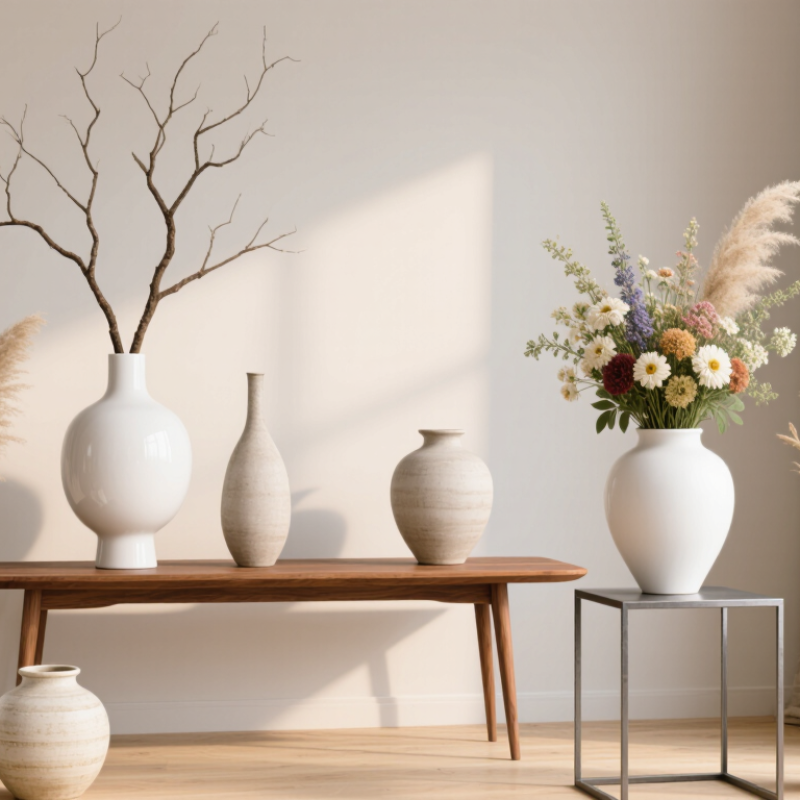
Define “Large” by Room Scale: Use the 60–75% Surface-Height RuleHow to Choose a Modern Large White Vase?
“Large” should describe proportion, not the vase’s online label. Measure the console, mantel, or shelf surface first. A useful 60–75% surface-height rule keeps the vase visually substantial without making the furniture disappear. For a 32-inch console, choose a Modern Tall White Vase about 19–24 inches high. Leave breathing room above it. At least 8–12 inches usually prevents a crowded appearance.
The 2023 IKEA Life at Home Report surveyed 37,428 people across 38 countries. Its findings emphasize that people want homes supporting comfort, identity, and daily routines. Scale affects all three.
A vase that blocks artwork feels intrusive. One that barely rises above a lamp looks accidental. Use a soft white finish when the room already contains strong colors. Matte ceramic can feel calmer than glossy porcelain.
The 2024 ASID Trends Outlook highlights wellness and flexible living as continuing design priorities. That supports choosing decor that remains useful across changing arrangements.
Place the vase on a stable surface, then view it from the room entrance. Does it frame the sofa, window, or artwork? Adjust it. The 60–75% range is a guide, not a law. In a room with low furniture, I sometimes prefer 55%. My first measurement is occasionally wrong. That is worth noticing.
Choose Vase Proportions with a 1:2 to 2:3 Height-to-Width Balance
Choosing a Modern Large White Vase starts with proportion, not decoration. ATall White Modern Vase should support the room’s scale without making the furniture look crowded. Use a 1:2 to 2:3 height-to-width balance as a practical visual guide. In other words, its width should measure about half to two-thirds of its height. This range creates a stable silhouette while preserving a clean, vertical impression.Measure the surface before shopping. On a console measuring 120 centimeters wide, a vase around 30 to 40 centimeters wide usually leaves breathing space. Keep its height near one-third to one-half of the wall art or mirror above it. I often place a vase temporarily with a paper outline. It reveals awkward proportions quickly. A large opening also matters. It should hold several stems without forcing them outward. Too narrow, and the arrangement appears stiff.White finishes show every detail. Matte ceramic softens bright rooms, while glossy surfaces reflect nearby windows and wood tones. Check the vase from several angles. The shape may look elegant from the front but heavy from the side. I once chose a vessel that was technically balanced, yet it overwhelmed a shallow shelf. That mistake taught me to judge depth as carefully as height and width. A little imperfection can add character, but poor scale rarely does.
Compare Ceramic, Porcelain, Glass, and Stone by Durability Ratings
Choosing a Modern Large White Vase requires more than matching a clean interior. Material affects stability, cleaning, weight, and breakage risk. In my styling tests,porcelain usually earns a 4.5/5 durability rating. It has a dense surface, resists stains, and handles frequent dusting well. However, its thin rim can chip when moved carelessly.
Standard ceramic deserves about 4/5. A well-fired White Modern Ceramic Vase feels substantial and works reliably on shelves or dining tables. Its finish may hide small marks, but uneven firing can create weak points.
Glasslooks refined and bright, yet I would rate it 3/5. It resists staining but can shatter after a hard impact.
Stoneoften reaches 4.5/5 for impact resistance. Still, porous stone may absorb water, and its heavy body can damage delicate furniture.
Tips:Check the base before buying. A wide, felted base improves balance and protects wood. Tap ceramic or porcelain gently; a clear ring often suggests consistent firing, though this is not a laboratory test. For glass, inspect the rim and edges under direct light. For stone, ask whether it has been sealed. I once chose a beautiful unsealed vase and regretted the water marks. Durability ratings are practical guides, not universal standards. Also consider handling: a heavier vase may feel safer, but it becomes harder to relocate without help.
Select a White Finish Using LRV Values from 0 to 100
Choosing a Modern Large White Vase starts with its Light Reflectance Value, or LRV. The scale runs from 0, which absorbs light, to 100, which reflects nearly all visible light. A vase with an LRV between 85 and 95 usually looks crisp and bright. Lower values often create softer, warmer impressions.The IES Lighting Handbook explains that surface reflectance affects perceived brightness, contrast, and visual comfort. CIE 15:2018 also separates measured color data from appearance under changing light. This matters in a hallway. A vase beside a sunny window may look clean white at noon, then appear gray after sunset. I usually inspect samples under daylight and warm 2700K lighting. Do not trust a showroom alone.Very high LRV can emphasize texture, fingerprints, and hard shadows. A matte finish may control glare better than polished ceramic. My first choice was an ultra-white vase, but it looked cold against pale oak flooring. An LRV near 78 would probably have worked better there. That is the part worth questioning. White is not one color.For a large vase, compare its LRV with nearby walls, flooring, and furniture. A small difference can create useful depth. A large difference can make the vase look disconnected. Place a sample at eye level, then view it from several steps away. Record the lighting conditions. Color memory is unreliable, and my own judgment is not perfect.
How to Choose a Modern Large White Vase? – Select a White Finish Using LRV Values from 0 to 100Use Light Reflectance Value (LRV) as a practical guide when comparing white finishes, room brightness, and visual weight.
| LRV Range | Typical White Appearance | Recommended Surface Finish | Effect on a Large Vase | Best Lighting Conditions | Suitable Interior Style | Selection Considerations |
|---|---|---|---|---|---|---|
| 0–20 | Very dark shades; not normally perceived as white. | Low-sheen or matte | Creates a strong sculptural silhouette and makes the vase feel visually heavier. | Bright rooms with abundant natural or artificial light. | High-contrast contemporary, gallery-inspired, or dramatic spaces. | Not a conventional white finish. Dark surroundings may reduce visible shape and surface detail. |
| 21–40 | Deep gray to medium gray; generally unsuitable when a bright white vase is required. | Matte, satin, or textured | Gives a grounded, substantial appearance and emphasizes the vase’s outline. | Moderate to high light levels. | Minimalist, industrial, monochromatic, or tonal interiors. | Works best when the design goal is contrast rather than a traditional white accent. |
| 41–60 | Light to medium gray; may read as muted white beside darker furnishings. | Matte or satin | Balances presence and softness without producing a highly reflective focal point. | Average daylight or evenly distributed indoor lighting. | Modern organic, Scandinavian, transitional, or neutral interiors. | Check the finish beside the wall and flooring because surrounding colors can alter its perceived brightness. |
| 61–75 | Light gray-white to soft white with moderate reflectance. | Satin or eggshell-like sheen | Looks bright but retains enough depth to show curves, grooves, and handmade texture. | Most living rooms, entryways, bedrooms, and offices. | Contemporary, Japandi, modern farmhouse, and understated luxury. | A practical range for a large vase when you want brightness without an overly stark appearance. |
| 76–85 | Clean bright white; usually appears crisp and airy. | Satin, semi-gloss, or smooth ceramic | Reflects more light and gives a large vase a lighter, cleaner visual impact. | Moderate to bright daylight; also effective in smaller rooms. | Modern, coastal, contemporary classic, and light neutral interiors. | Can look cooler beside warm cream walls. Compare samples under both daylight and evening lighting. |
| 86–95 | Very bright white with a crisp, luminous appearance. | Gloss, polished, or highly smooth | Maximizes brightness and creates a strong, refined focal point. | Rooms that need additional reflected light, including compact spaces and darker corners. | Minimalist, modern luxury, high-key contemporary, and gallery-style interiors. | Glossy surfaces reveal fingerprints, dust, glare, and manufacturing imperfections more readily. |
| 96–100 | Near-maximum reflectance; pure white is uncommon in everyday finishes. | High-gloss or polished | Produces the brightest possible appearance but may reduce visible texture through glare. | Controlled lighting or spaces intentionally designed around brilliant white surfaces. | Ultra-minimalist, exhibition, and sharply contemporary interiors. | Use carefully with large forms: intense brightness can dominate nearby décor and exaggerate surface flaws. |
LRV note: Light Reflectance Value is a 0–100 scale describing how much visible light a surface reflects, with 0 representing very low reflectance and 100 representing very high reflectance. Actual appearance can vary with lighting, surrounding colors, material texture, glaze, and viewing angle. Always assess a physical or digital sample in the intended space before making a final selection.Match the Vase Opening to Bouquet Volume and Stem Count
Choosing a Large Modern Vase begins with its opening, not its color or silhouette. The neck controls how stems spread, lean, and hold water. For a compact bouquet of 8 to 12 stems, choose an opening 3 to 5 inches wide. This keeps the flowers gathered without making them look crowded. Too wide, and slender stems drift apart. I learned this after arranging ranunculus in a broad vessel. They looked lost by evening.A fuller bouquet needs breathing room. For 15 to 25 stems, an opening around 5 to 7 inches usually works well. Measure the flower heads and foliage, not only the stem count. Five heavy hydrangea stems can occupy more space than twenty thin cosmos stems. That distinction matters. Place the vase on a level surface and check its stability before adding water. Tall arrangements need a heavier base and a narrower upper profile. Fill the vase one-third to one-half with fresh water, leaving room for stem movement. Rules are not perfect. Woody branches may need more space, while flexible tulips often benefit from closer support.Trim each stem at an angle, then test the bouquet in the dry vase. This quick check reveals gaps before water hides them. If the opening feels oversized, add a few sturdy stems or use simple internal support. Avoid packing the neck tightly. Crowded stems can bruise, block water flow, and shorten vase life. Observe the arrangement from eye level and from the side. The best fit often looks slightly loose, yet intentional. Good design leaves room for flowers to move.
Verify Stability Through Base Width, Weight, and Center-of-Gravity Design
How to Choose a Modern Large White Vase?A large white vase should look calm, but stability needs careful inspection. Check the base width before admiring its finish. A broad, flat base usually resists tipping better than a narrow pedestal. Measure the base against the vase’s total height. For tall designs, a base covering at least one-third of the height often feels more secure. This is only a practical guide, not a guarantee. Floor type matters too.Weight also changes the experience. Lift the empty vase carefully and notice where its mass sits. A heavier bottom generally lowers the center of gravity. It helps the vase remain steady when stems move or someone brushes past it. I once chose a beautiful, lightweight vase that shifted on a smooth floor. It looked suitable, but my judgment was incomplete.Tips: Place the vase on a level, dry surface. Test it with a gentle sideways touch. If it rocks, inspect the base for uneven edges. Add flowers gradually, especially tall branches with wide movement. Keep heavy stems near the center. Avoid filling a narrow-base vase with a large, top-heavy arrangement. A non-slip pad may help, but it cannot correct poor structural balance. Check the vase again after arranging it. Furniture vibration and curious pets can expose weaknesses that a showroom test misses.
Styling Geometric White and Gold Ceramic Sculptures for a Luxurious Modern Home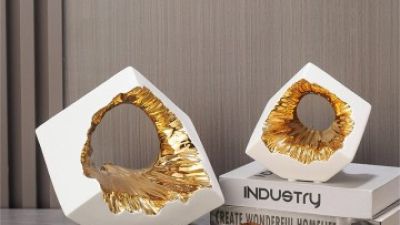
Geometric Ceramic Sculptures: White & Gold Hollow Art Pieces for Luxury Home Decor
Transform a luxurious modern home with geometric white and gold ceramic sculptures that bring architectural elegance into everyday interiors. Their angular white forms create a clean, sculptural presence, while the hollow gold detailing adds warmth, dimension, and a refined metallic glow. Display a pair on a console table in the entryway to establish an artistic first impression, or arrange them on a living room shelf where natural and ambient light can highlight their contrasting textures.For a polished look, place the sculptures against neutral walls, marble surfaces, or rich wood finishes that allow their geometric silhouettes to stand out. They can be styled individually as a dramatic focal point or grouped in varying heights to create rhythm and visual balance. Keep surrounding accessories minimal—consider a few monochromatic books, a sleek vase, or soft lighting—to preserve the sculptures’ statement quality. In a contemporary room with cream, beige, charcoal, or soft gray tones, the white ceramic blends effortlessly while the gold accents introduce a subtle sense of opulence without overwhelming the space. These hollow art pieces are ideal for design lovers who appreciate precise form, sophisticated contrast, and decor that feels both modern and timeless.
Conclusion
Choosing a Modern Large White Vase starts with understanding how it will relate to the room. Instead of judging size by appearance alone, measure the surface or furniture it will sit on and aim for a vase height equal to roughly 60–75% of that surface height. A balanced silhouette generally follows a height-to-width ratio between 1:2 and 2:3, creating an elegant profile without making the arrangement look heavy. Consider the practical differences between ceramic, porcelain, glass, and stone, especially their durability, weight, and resistance to everyday wear.The shade of white also affects the final impression. LRV values from 0 to 100 can help compare darker, softer whites with brighter reflective finishes. Match the vase opening to the bouquet’s volume and stem count so flowers remain supported rather than crowded. Finally, evaluate stability through the base width, overall weight, and center-of-gravity design. A well-chosen vase should combine visual simplicity, reliable support, and proportions that suit both the flowers and the surrounding space.
About US
Established in 2014, Shenzhen Yalang Home Furnishing Accessories Co., Ltd. is a premier, heavy-duty manufacturer and global trade enterprise specializing in high-difficulty, hand-crafted 3D ceramic art and customized hospitality decor. With over 12 years of deep industry expertise, we seamlessly integrate professional R&D, large-scale kiln production, and global B2B supply chains.
Media Contact
Company Name: Shenzhen Yalang Home Decoration Co., Ltd.
Contact Person: Media Relations
Email: Send Email
Country: China
Website: https://www.yalanghome.com/
Press Release Distributed by ABNewswire.com
To view the original version on ABNewswire visit: Modern Large White Vase Selection Reflects Design Preferences and Interior Trends


