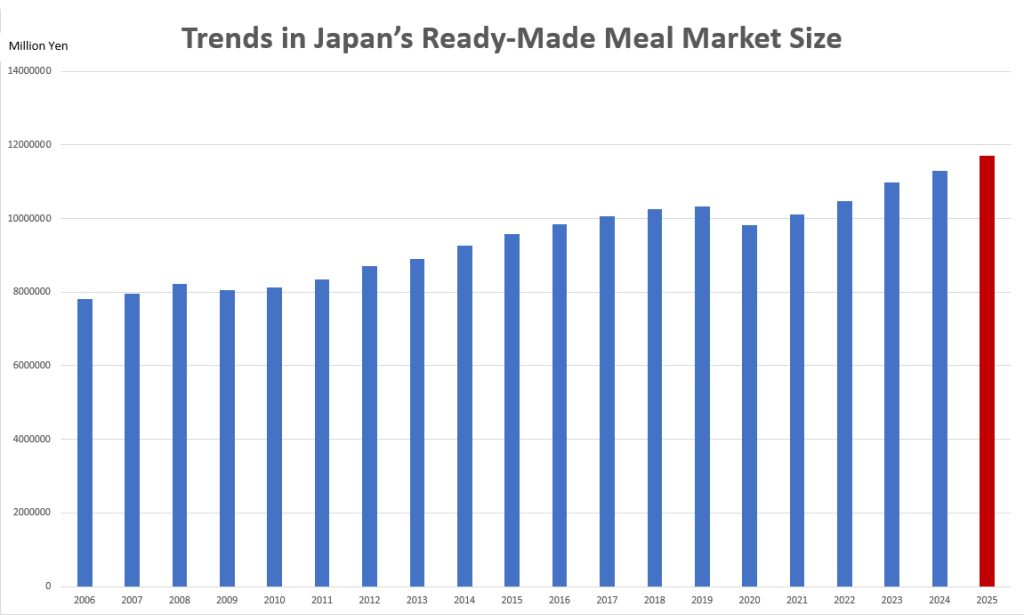
Japan’s ready-made meal (sozai) market continues to expand as dual-income households rise and demographic changes reshape consumer behavior. The market is projected to grow 1.5 times over the past two decades by 2025, reflecting strong demand for convenient meal options.
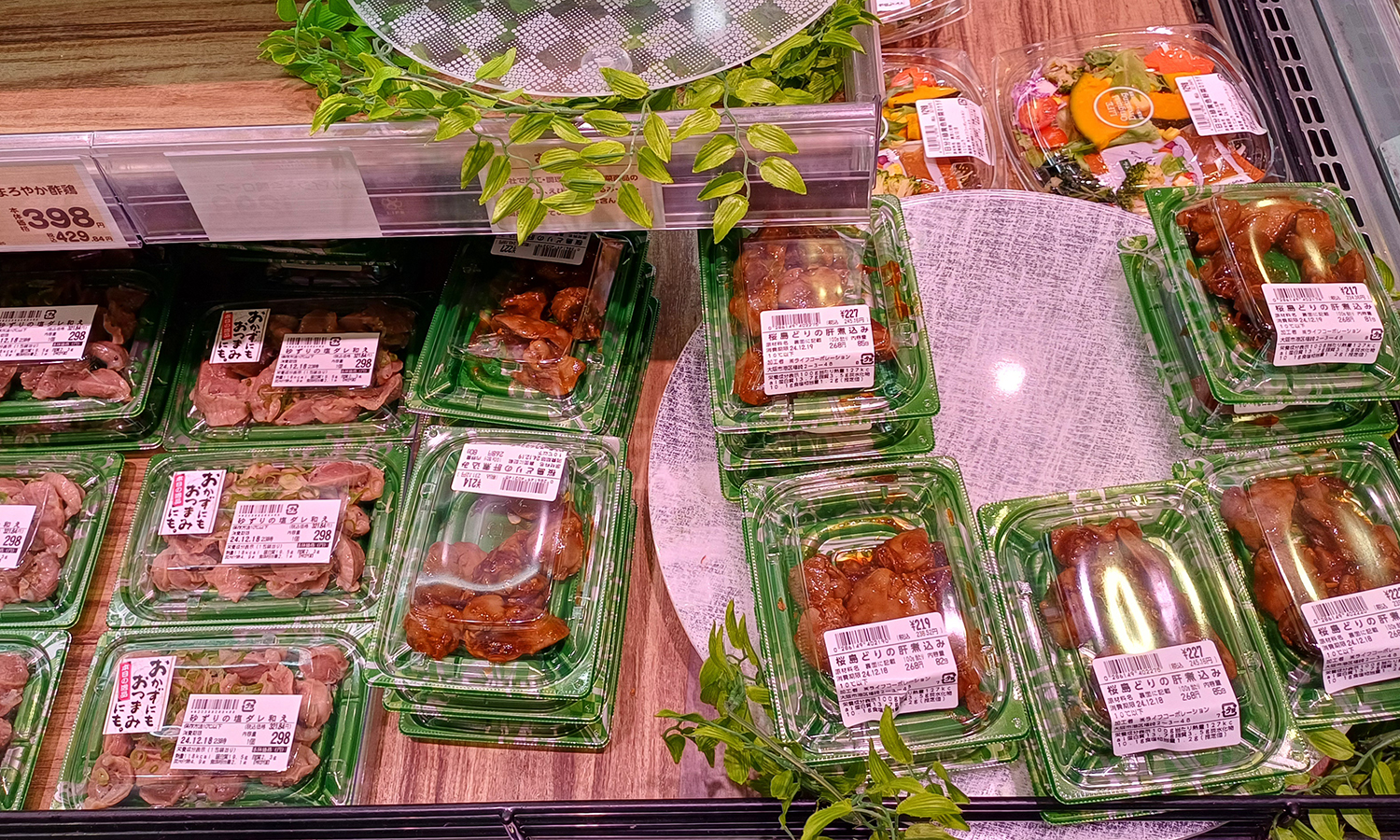
TOKYO, JAPAN (MERXWIRE) – Japan’s ready-made meal market has shown steady growth in recent years. Known as “sozai,” these products include prepared dishes, side dishes, and home-style meals designed for consumers with limited time for cooking, making them an increasingly important part of daily diets.
According to the Japan Ready-Made Meal Association, the market is expected to reach 11.7075 trillion yen in 2025, up 3.7% from the previous year. The growth is driven not only by rising demand but also by higher food prices, including rice, which have pushed up product unit prices.
Over the past 20 years, the market has expanded by nearly 50%. Although it experienced temporary declines during the 2009 global financial crisis and the early stages of the COVID-19 pandemic in 2020, the overall trend has remained upward, with five consecutive years of growth leading into 2025. This expansion stands out against the backdrop of sluggish domestic consumption caused by population decline and aging.
By distribution channel, convenience stores continue to hold the largest share, accounting for about 30% of the market, though their growth has slowed. In contrast, supermarkets are expanding more rapidly, including both food supermarkets and general merchandise stores. Specialty ready-made meal shops are also seeing steady growth. Many supermarkets are emphasizing “freshly prepared in-store” offerings and expanding deli sections to attract customers.
Despite facing rising costs for raw materials, labor, and logistics in 2025, the market continues to grow, supported by new product development and pricing strategies. Consumers are seeking both quality and convenience, while aiming to reduce time spent on cooking, further boosting demand for ready-to-eat meals.
A working woman in her 30s based in Tokyo said, “After work, it’s already late, and I don’t have the time or energy to cook a full meal. Buying ready-made dishes from supermarkets is convenient, offers variety, and can still be nutritious.” She noted that such products help maintain a balanced diet despite a busy lifestyle.
Meanwhile, a retired man in his 70s said, “Living alone, cooking often leads to leftover ingredients and waste. Buying small portions of prepared food is more practical and saves effort.” He added that ready-made meals are especially suitable for single-person and elderly households.
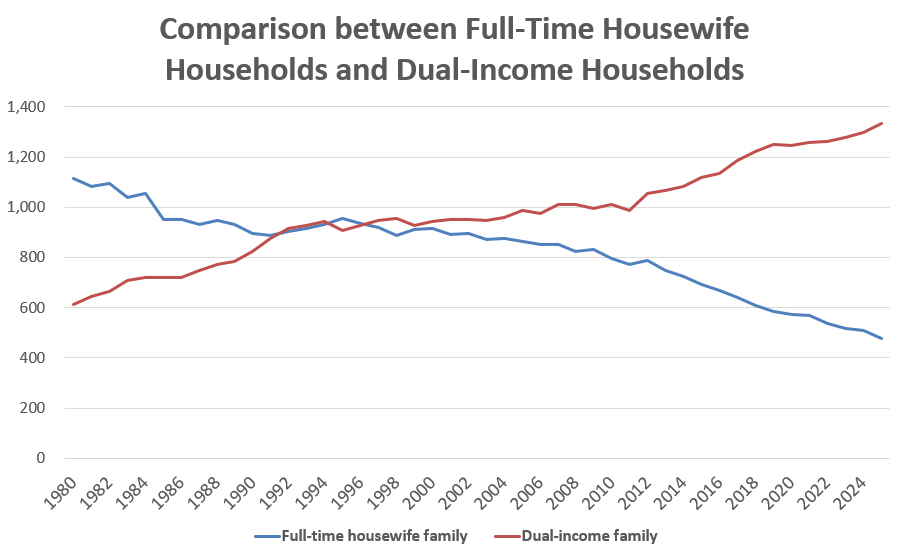
Experts point out that the rise in dual-income households is a key driver. By 2025, such households account for about 73% of all households in Japan, meaning three out of four families have two incomes. Combined with the increase in single-person and elderly households, this shift continues to fuel demand for ready-made meals.
The Kanto Smart Living Cooperative notes that while convenience is a major factor, consumers should remain mindful when purchasing ready-made foods. It recommends checking nutritional labels and portion sizes to avoid overconsumption and food waste, as well as taking advantage of discounted near-expiry products for more cost-effective shopping.
The organization also advises consumers to balance convenience with health by comparing food quality and shelf life, especially as food prices continue to rise.
Overall, the continued expansion of Japan’s ready-made meal market reflects evolving lifestyles and shifting consumer values. By enhancing taste, quality, and safety while maintaining convenience, businesses are successfully meeting consumer needs. Looking ahead, ready-made and ready-to-eat meals are expected to play an even more significant role in everyday dining amid ongoing social changes.
Media Contacts:
Kanto Smart Living Cooperative
PR Agency:
MERXWIRE INC.
Ada Huang
pr@merxwire.com
SOURCE: Kanto Smart Living Cooperative


