NANJING, CHINA, July 7, 2026 /EINPresswire.com/ — How to maximize efficiency with reliable firefighting TIC during search and rescue? This question remains a critical focus for emergency services worldwide. In structural fires, structural collapses, and complex industrial disasters, the first few minutes dictate the outcome of the entire operation. Traditional search methods often fall short when smoke blocks all visibility and hazardous environments threaten team safety. To overcome these barriers, deployment of advanced thermal imaging cameras (TIC) has evolved from an optional luxury into an operational requirement. However, carrying multiple disconnected devices for thermal vision, location monitoring, and life safety tracking can overwhelm personnel.
The industry is shifting toward a unified methodology known as All-in-One Tactical Awareness. By consolidating multi-band imaging, environmental positioning, and Personal Alert Safety System (PASS) into a single integrated platform, modern systems give frontline teams comprehensive situational awareness without adding physical bulk. Partnering with a specialist Reliable Firefighting TIC Supplier allows emergency departments to deploy hands-free, high-performance equipment tailored specifically for severe structural environments.
1.Maximize Efficiency by Freeing Responders’ Hands Through Mask Integration
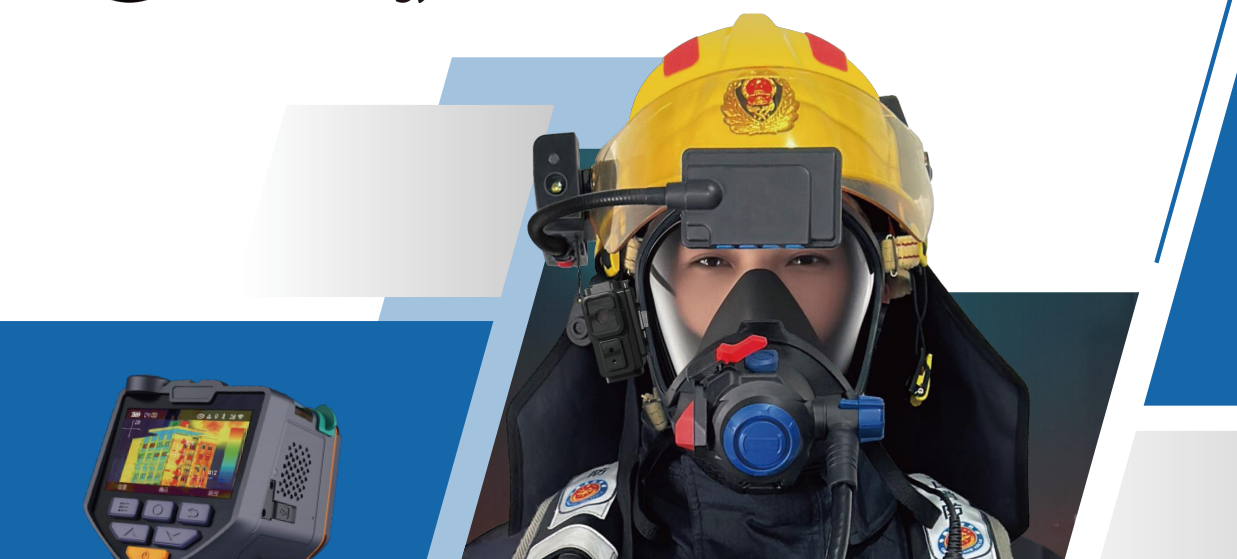
In active structural firefighting, physical mobility directly impacts operational speed. Traditional handheld thermal imaging cameras require a firefighter to dedicate one hand to holding the device, which restricts their ability to carry tools, manage hoses, or clear debris. Modern tactical systems resolve this constraint by integrating the thermal imaging module and display optics directly onto the self-contained breathing apparatus (SCBA) mask or the fire helmet structure using specialized interchangeable mounting clamps.
This mask-mounted format keeps a firefighter’s hands completely free during search and rescue operations. By placing the display close to the eye, the system achieves a near-eye viewing effect equivalent to looking at a 60-inch screen from a distance of 3 meters. This clear projection provides continuous visual telemetry without obstructing the user’s natural peripheral vision or forcing them to look away from their immediate path, ensuring they can move forward quickly through unknown layouts.
2.Maximize Efficiency by Deploying Dual-Camera Architecture and Digital Filtering
Heavy smoke and dust generated during structural fires block visible light, making standard optical navigation impossible. Advanced integrated TICs counter this through a synchronized dual-camera configuration that incorporates both an uncooled infrared thermal sensor and a high-sensitivity visible light camera. By capturing data across distinct spectral bands simultaneously, the device handles both complete darkness and varied ambient light conditions.
Raw thermal data is processed in real time using dedicated digital filtering algorithms designed to penetrate thick particulate smoke. The system emphasizes edge details and structural outlines, allowing firefighters to easily distinguish interior walls, doorways, furniture, and victims in zero-visibility conditions. Additionally, built-in intelligent heat source sensing algorithms automatically flag abnormal temperature spikes, while integrated laser positioning modules project a targeting line to help teams quickly locate the precise core of a fire or hot gas layer.
3.Maximize Efficiency by Linking Frontline Telemetry with Command Operations
Tactical awareness should not be confined solely to the individual inside the burning structure. Effective fireground management relies on continuous data sharing between frontline teams and the incident command post. Advanced tactical TICs bridge this information gap by pairing built-in long-range data storage and mobile wireless networking modules, including 4G data transmission.
While the firefighter views real-time telemetry through their mask display, the dual-band visual data stream and precise temperature markers are transmitted simultaneously to the backcourt command center. This live link allows incident commanders to see exactly what the entry team sees, facilitating fast, data-driven decisions on resource allocation, structural integrity changes, and exit routing. Furthermore, the large-capacity onboard memory logs all video feeds locally, preserving precise tactical records for post-incident analysis and department training programs.
4.Maximize Efficiency by Combining Thermal Diagnostics and PASS Safety Ecosystems
Maximizing efficiency requires reducing the physical weight and mechanical complexity of a responder’s gear. The core philosophy of All-in-One Tactical Awareness is the consolidation of three traditionally separate safety technologies into a unified asset: thermal imaging diagnostics, environmental telemetry, and the Personal Alert Safety System (PASS).
Instead of forcing a responder to monitor a standalone chest-mounted pressure gauge, an independent handheld TIC, and a separate motion alarm, these functions operate together seamlessly. The integrated system displays real-time SCBA air pressure data through a clean Head-Up Display (HUD) or smart electronic pressure gauge, provides continuous thermal imaging, and maintains passive motion tracking. If a firefighter becomes trapped or immobile, the integrated PASS module triggers automated distress alerts both locally and back to the command center. This integration streamlines gear configurations, avoids frequency interference between separate electronic components, and ensures vital life-safety metrics are tracked automatically.
Certified Industrial Engineering and Production Expertise
Emergency rescue equipment must withstand extreme physical stress, including high thermal loads, mechanical impacts, and high-pressure water exposure. Developing systems capable of reliably housing sensitive optical arrays, wireless transceivers, and complex power management boards requires extensive industrial design experience and rigorous quality testing.
As an established leader in this sector, ZHENGZE provides complete original equipment manufacturer (OEM) capabilities backed by a dedicated research and development team and a manufacturing facility covering more than 5,000 square meters. Backed by over 100 core patents and an expert workforce of 200 professionals, the company manages the entire production cycle in-house—including custom functional programming, physical product design, structural component engineering, mold fabrication, and international certification compliance. This vertically integrated manufacturing model ensures that every integrated TIC system delivers consistent, high-fidelity thermal imaging and durable performance across diverse emergency scenarios, including structural firefighting, urban search and rescue (USAR), industrial gas detection, and confined space operations.
Optimizing efficiency during search and rescue operations requires a balanced approach that combines advanced technology with practical usability. By adopting a unified approach to tactical awareness and choosing integrated, hands-free thermal imaging solutions, emergency response teams can navigate hazardous environments with greater speed, precision, and safety.
To learn more about advanced emergency equipment and integrated rescue systems, visit the official website at Nanjing ZHENGZE Technology.
Nanjing Zhengze Technology Co., Ltd.
Nanjing Zhengze Technology Co., Ltd.
email us here
Legal Disclaimer:
EIN Presswire provides this news content “as is” without warranty of any kind. We do not accept any responsibility or liability
for the accuracy, content, images, videos, licenses, completeness, legality, or reliability of the information contained in this
article. If you have any complaints or copyright issues related to this article, kindly contact the author above.

Media gallery